My interest in animation centers on two areas: the production of game PVs (promotional videos) and the creation of independent animation. These fields differ in production processes, funding models, and team structures, yet both demand strong storytelling and compelling visual design. By comparing a commercial studio example (NetEase Games) with an independent studio model (Studio Ghibli), I aim to clarify how career paths and creative freedom vary across these contexts.
- Game PV Animation — Case Study: NetEase Games
In the game industry, animation sits at the intersection of technology and artistic craft. Game animators must be fluent with tools such as Maya, MotionBuilder, and Blender; they are responsible not only for producing convincing character motion but also for ensuring that animations perform smoothly in a real-time environment.
NetEase Games’ careers pages emphasize that animators “work with programmers, planners, and artists to complete real-time motion systems,” which highlights how technical knowledge and cross-department collaboration are as important as pure artistic skill.
For promotional work, PVs play a crucial role in communicating a title’s world, characters, and visual identity. These cinematic pieces appear in marketing campaigns for new releases, updates, new characters, or seasonal events—serving to attract both players and a broader audience.
A representative example is the Li Bai: Sharp Power PV (produced in partnership with NetEase’s animation collaborators). It blends dynamic character movement, expressive lighting, and cinematic editing to capture attention and build cultural visibility. This case demonstrates how well-executed game PVs can amplify a game’s brand and narrative impact.
- Independent Animation — Case Study: Studio Ghibli
Independent studios such as Studio Ghibli prioritize personal expression, narrative depth, and emotional nuance over large-scale industrial workflows. Directors frequently engage directly in storyboard work, character design, and timing decisions, so although projects may be smaller in scale, they often allow far greater creative autonomy.
Documentaries like The Kingdom of Dreams and Madness and 10 Years with Hayao Miyazaki reveal Miyazaki’s hands-on approach: he reviews and refines individual shots, motions, and backgrounds to preserve a consistent “Miyazaki style.” Even while adopting digital tools, he maintains a hand-drawn 2D aesthetic and carefully balances traditional drawing with modern assistance. Miyazaki’s “drawing while thinking” method—developing story and emotion as he sketches—is evident in productions such as Ponyo, where site visits to the Seto Inland Sea informed the film’s atmosphere and settings. This process shows how independent animation weaves observation, feeling, and visual storytelling into a continuous creative practice.
Conclusion
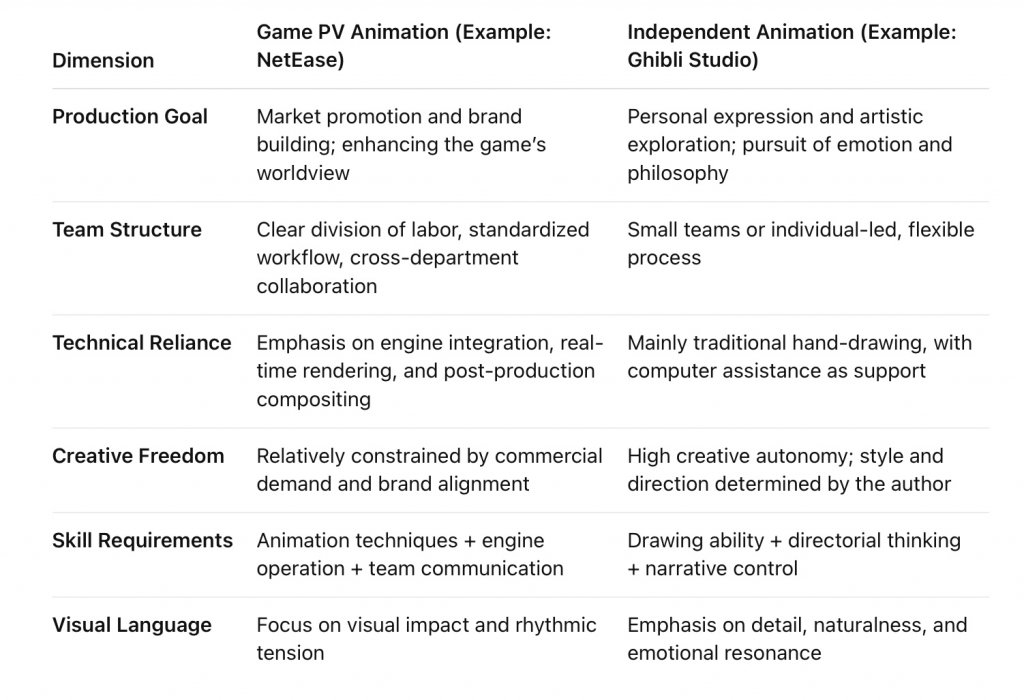
I summarized the key differences between game PVs and studio-led animations in a chart to visualize contrasts in workflow, team roles, and creative control. These case studies have sharpened my career goals and interview preparation: in my portfolio I intend to combine the narrative clarity and visual voice of independent work with the technical proficiency and collaborative skills required for commercial game production.
References:
https://www.neteasegames.com/careers/en
https://montreal.neteasegames.com/careers/pm/animation/20191030/31808_842178.html
https://gamedesignskills.com/game-art/video-game-animator
https://www.talentlyft.com/template/game-animator-job-description
Leave a Reply